By
Jamilu Abubakar
One in every ten deliveries in Gombe State results in the birth of a premature baby, highlighting the need for stronger interventions to improve newborn survival.
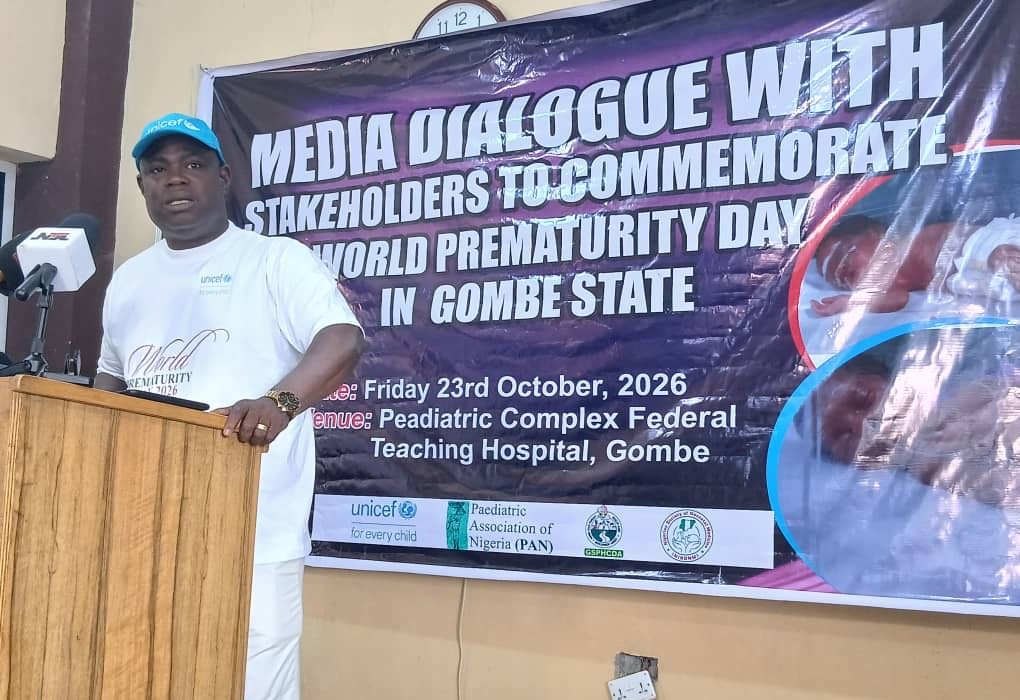
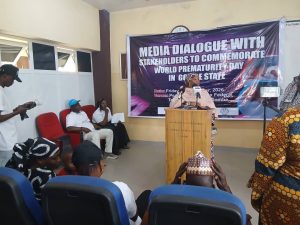
This was disclosed during a media dialogue with stakeholders to commemorate World Prematurity Day in Gombe. The event was jointly organised by the United Nations Children’s Fund, UNICEF, Gombe State Government and the Paediatric Association of Nigeria, PAN.
A Neonatologist at the Federal Teaching Hospital, Gombe, Dr Rabo Adejiji, said about thirty-five out of every one hundred paediatric patients admitted at the facility are premature babies.
Dr Adejiji identified hypertensive disorders in pregnancy, particularly pre-eclampsia and chronic hypertension, as the leading causes of preterm deliveries at the hospital. She said other risk factors include multiple pregnancies, malaria, urinary tract infections, diabetes, abnormalities of the uterus or cervix and complications involving the umbilical cord.
She explained that premature babies are more vulnerable to infections and other life-threatening complications because their brains, immune systems and other organs are not fully developed. She added that the hospital’s figures do not represent the entire burden in the state, as some premature babies are managed at primary and secondary health facilities, while others may not reach the tertiary facility.
The Programme Manager, Gombe State Primary Health Care Development Agency, Dr Maryam Abubakar, said one in every ten deliveries in Gombe State is a premature birth, stressing the need for sustained government and partner support to improve the survival of such babies.
Dr Maryam said the state government is strengthening newborn care through the training and deployment of healthcare workers, including personnel trained in neonatal resuscitation and Kangaroo Mother Care. She added that government, in partnership with UNICEF and other development partners, is providing essential equipment to health facilities and strengthening referral services for babies requiring specialised care.
UNICEF Public Health Specialist at the Bauchi Field Office, Dr Seyi Olusunde, described prematurity as one of the leading contributors to neonatal deaths in Nigeria. He said reducing under-five mortality requires greater attention to newborn survival through specialised care, skilled health workers, essential equipment and improved infrastructure.
Dr Olusunde called for stronger collaboration between government and development partners to build the capacity of healthcare workers and expand specialised newborn services beyond tertiary facilities. He also advocated support for mothers of premature babies, particularly those facing financial and geographical barriers to accessing care.
A mother of premature twins, Esther Victor, who shared her experience at the dialogue, described caring for premature babies as difficult and emotionally challenging, particularly after losing one of her twins. She commended the medical personnel for their support and appealed for greater care and attention in managing premature babies and supporting their mothers.
The stakeholders stressed that increased awareness, early antenatal care, skilled health personnel, appropriate equipment and timely referral remain critical to reducing preventable deaths among premature babies in Gombe State.