By
Innocent Onoh
Stakeholders in nation’s maritime, environmental and research sectors have called for the urgent introduction and entrenchment of ocean literacy at all levels of society as a critical step towards achieving sustainable management of ocean resources, reducing marine pollution, and unlocking the full potential of the Blue Economy for national development.
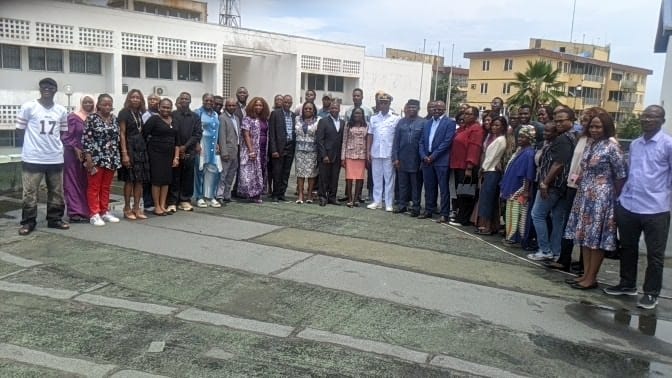
The call was the major outcome of the 2026 World Ocean Day celebration jointly organised by the Nigerian Institute for Oceanography and Marine Research (NIOMR) and the International Ocean Institute (IOI) Nigeria Centre in Lagos.
Participants at the event acknowledged the efforts of the Federal Government in advancing the Blue Economy through the development of the National Policy on Marine and Blue Economy, improvements in maritime security, and investments in critical ocean-related infrastructure.
However, they warned that such efforts may yield limited results if Nigerians remain largely unaware of the importance, benefits and vulnerabilities of the ocean.
The stakeholders maintained that increased public understanding of the ocean and its role in supporting livelihoods, food security, transportation, climate regulation and economic growth would encourage responsible stewardship and sustainable utilization of marine resources.
Delivering the keynote lecture titled “Reimagining the Blue Economy: Achieving Sustainable Prosperity with the Ocean,” Maritime Communications Expert, Dr. Ubong Essien, observed that public awareness about the ocean remains significantly low despite its enormous contribution to human existence and economic development.
According to him, meaningful progress in ocean governance and Blue Economy development can only be achieved through broad collaboration among governments, businesses, civil society organisations, research institutions and citizens.
Dr. Essien stressed that while Nigeria has recorded notable successes in maritime security, including several years without major piracy incidents, significant challenges such as environmental degradation, illegal maritime activities, unsafe operational practices and low public awareness persist.
The Maritime Strategist and founder Blue Economy Academy noted that the ocean has often been viewed primarily as a source of extraction rather than a resource that requires protection and sustainable management.
“For too long, our relationship with the ocean has been largely one-sided. We have focused on taking from it without giving sufficient attention to its protection and sustainability. Such an approach is unsustainable. We must correct this imbalance and build a healthier relationship with our marine environment,” he said.
Essien emphasised the need for a nationwide ocean literacy campaign capable of reaching every state, community and demographic group, arguing that sustainable ocean development cannot succeed without an informed and engaged population.
He further called on Nigerians to demand clear commitments from political leaders and electoral candidates on issues relating to climate change, ocean sustainability, environmental protection and the future of coastal communities.
Dr. Essien warned against unsustainable exploitation of marine resources, noting that many people mistakenly assume that ocean resources are limitless because of the vastness of the sea.
Using fisheries as an example, he explained that excessive harvesting without adequate conservation measures ultimately leads to resource depletion, ecosystem damage and declining productivity.
“The future of the ocean depends on our actions today. If we embrace sustainability, the ocean will continue to provide opportunities and prosperity for generations to come. If we fail to do so, we risk losing one of humanity’s most valuable natural assets,” he added.
In a goodwill message delivered by the Director of the IOI Nigeria Centre, Mr. Akanbi Williams, the Managing Director of the International Ocean Institute Headquarters, Malta, Ms. Antonella Vassallo, urged governments, scientists, industries, educators, civil society organisations and local communities to strengthen partnerships aimed at ensuring the responsible and sustainable use of ocean resources.
She noted that the future of humanity is closely tied to the health of the ocean and called for innovative approaches to addressing ocean challenges while promoting a Blue Economy that benefits both people and nature.
Vassallo described the Blue Economy as a strategic pathway to sustainable development, capable of generating employment, innovation, food security and economic growth, provided marine resources are managed responsibly and equitably.
According to her, sustainable Blue Economy development must balance economic opportunities with environmental stewardship, marine biodiversity conservation and long-term sustainability.
She identified ocean governance, ocean science, ocean literacy and capacity development as critical pillars for achieving these objectives.
Earlier in his welcome address, Mr. Akanbi Williams, speaking in his capacity as Director of the IOI Nigeria Centre, described the ocean as the foundation of life on Earth, noting that it regulates climate, supports biodiversity, produces much of the oxygen humans breathe and sustains livelihoods for billions of people.
He expressed concern over growing threats to the marine environment, including pollution, habitat destruction, overexploitation of resources, climate change and unsustainable development practices.
Williams said that for Nigeria, a nation endowed with extensive coastlines and abundant marine resources, reimagining its relationship with the ocean is not only an environmental necessity but also an economic imperative.
He stated that the ocean offers enormous opportunities in fisheries, maritime transport, tourism, renewable energy, marine biotechnology, coastal resilience and job creation, but stressed that realizing these opportunities requires balancing economic prosperity with environmental sustainability and social equity.
“Together, let us reimagine our future and build a new relationship with our ocean — one founded on respect, responsibility, sustainability and shared prosperity,” he urged.
In her welcome remarks delivered on behalf of the Executive Director of NIOMR, the Institute’s Director of Research, Dr. Olajumoke Edun, reaffirmed the long-standing partnership between NIOMR and the IOI Nigeria Centre in advancing ocean governance, marine scientific research, capacity development, ocean literacy and sustainable ocean management.
She noted that since 2009, both institutions have jointly commemorated World Ocean Day as a platform for dialogue, advocacy and action on issues affecting oceans and coastal environments.
Dr. Edun stated that the collaboration has become even more important as Nigeria increasingly embraces the Blue Economy as a strategic pathway for national development.
She opined that the partnership will continue to support scientific research, capacity building, ecosystem-based management, marine biodiversity conservation, sustainable fisheries development, public awareness creation and the implementation of global ocean initiatives, including the United Nations Decade of Ocean Science for Sustainable Development (2021–2030).
She further expressed optimism that the collaboration would help position Nigeria as a leading voice in ocean governance and sustainable Blue Economy development within Africa and the Gulf of Guinea region.
The event also featured presentations by young innovators under the Arctic Blue Action Open Challenge 3.1, highlighting the growing role of youth participation in ocean stewardship and sustainable development.
Representatives of several organisations attended the programme, including the Nigerian Ports Authority, the Fisheries Society of Nigeria, the University of Lagos, Sterling One Foundation, maritime institutions, researchers, environmental organisations and students of oceanography.
The stakeholders unanimously agreed that strengthening ocean literacy among Nigerians remains one of the most effective strategies for promoting sustainable ocean governance, protecting marine ecosystems and maximizing the enormous opportunities available within the nation’s Blue Economy sector.