By:
Jamilu Wambai
Stakeholders in the law enforcement sector have called for the strict enforcement of penalties to ensure the effective prosecution of wildlife and forest crimes in Nigeria.
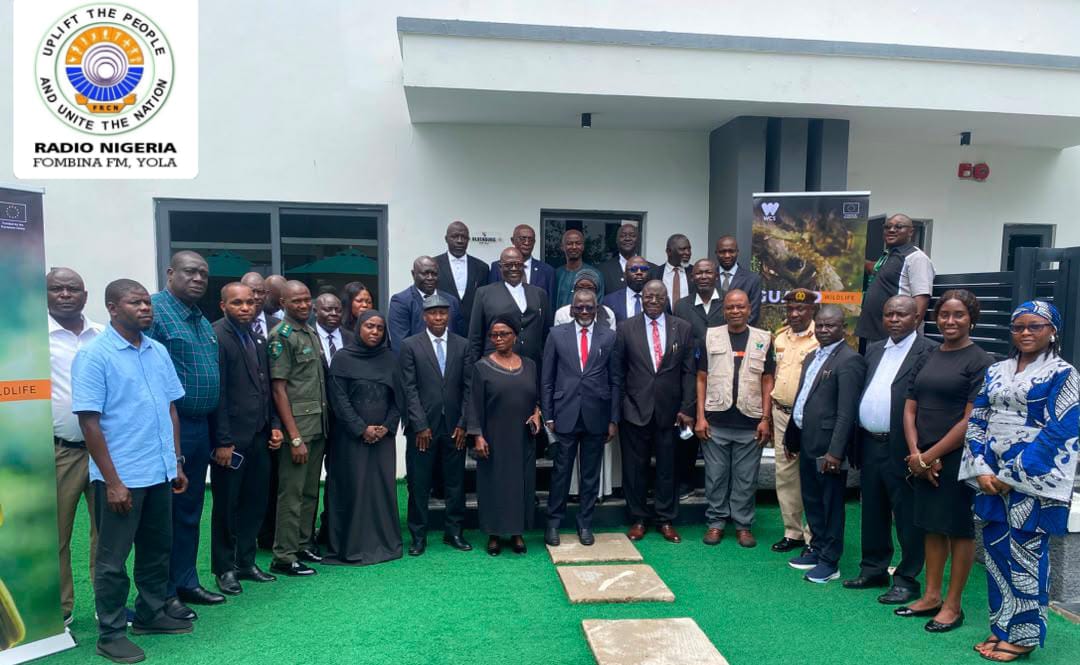
The call was made at a capacity-building workshop for High Court judges and security Agencies organized under the EU GUARD Wildlife Global United Action to Reduce and Dismantle Wildlife Crime Project, funded by the European Union and implemented by the Wildlife Conservation Society in Yola.
The workshop brought together High Court judges and members of the Wildlife Law Enforcement Task Force, including representatives of relevant security and law enforcement Agencies, to strengthen collaboration in tackling wildlife and forest crimes.
Declaring the workshop open, the Nigeria Program Manager of the Wildlife Conservation Society, Teyima Uza, said the training was designed to strengthen the capacity of judicial officers to effectively prosecute wildlife and forest crime cases through a better understanding of relevant laws, investigative procedures, evidence management and the transnational nature of organised wildlife crime.

Uza urged participants to deepen collaboration among the judiciary, prosecutors, customs officials and other law enforcement agencies to ensure that offenders are brought to justice.
In a remark, the Adamawa State Coordinator of the National Environmental Standards and Regulations Enforcement Agency NESREA, Abdulhamid Aliyu, represented by the Assistant Chief Scientific Officer, Sulaiman Dallatu, described wildlife and forest crime as a major threat to biodiversity, environmental sustainability and National Development.
He said the illegal trade in wildlife and forest resources generates billions of dollars annually for organized criminal networks and called for stronger collaboration among the judiciary and law enforcement agencies to curb wildlife trafficking and related offences.
Participants described the workshop as timely, expressing optimism that the knowledge gained would improve investigations, prosecutions and judicial decisions on wildlife and forest crime cases.
The workshop ended with recommendations to strengthen policies, promote wildlife conservation and leverage technology to combat wildlife and forest crimes.