
By Gloria Abutu
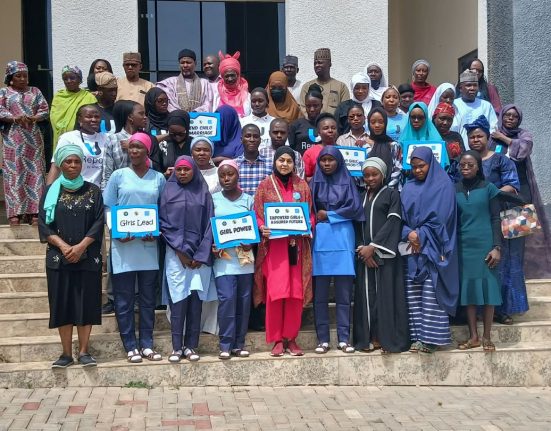
To tackle the rising rejection of Nigerian agricultural exports, the Nigerian Export Promotion Council (NEPC) has trained 50 small-holder farmers in Adamawa state on safe pesticide use.
The training, held at the Geriyo Irrigation Farm Project in Yola, was organized in collaboration with the Adamawa Agricultural Development Program (AADP).
NEPC’s Executive Director/CEO, Mrs. Nonye Ayeni, at the event, emphasized the importance of equipping farmers with knowledge to prevent export bans on Nigerian farm produce.
“Agricultural products remain one of Nigeria’s key non-oil exports, and ensuring they meet international safety standards is crucial for increasing our global market share,” she said.
Ayeni highlighted that excessive pesticide residues, particularly dichlorvos, have been a major cause of Nigeria’s export rejections.
“The European Union and other international markets have strict regulations on food safety. We must ensure our produce is free from harmful residues so our farmers can compete favourably,” she noted.
Representing Ayeni, Trade Advisor and Deputy Director Anani-Ben Egon reiterated NEPC’s dedication to supporting farmers with training and certification assistance.
“This initiative is designed to educate our farmers on the proper use of pesticides and how to comply with global food safety regulations,” he stated.
“When our farmers use pesticides correctly, we not only protect human health but also boost Nigeria’s agricultural trade,” he added.
The state Commissioner for Commerce, Trade, and Industry, Dr. Ishaya John Dabari, reaffirmed the state’s commitment to agricultural best practices.
“Adamawa is rich in the production of groundnuts, soybeans, and other crops, as well as livestock,” he said.
The state government is collaborating with other federal agencies to ensure that our agricultural products meet international safety standards, this will help help to unlock greater economic opportunities for our farmers,” he added.
Some beneficiaries, Beatrice Benjamin and Stephen Burbur described the training as timely.
They expressed gratitude for the intervention and pledged to share the knowledge gained with other farmers.
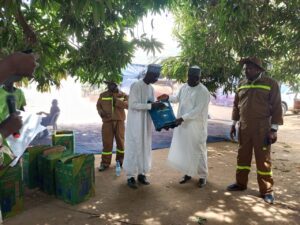
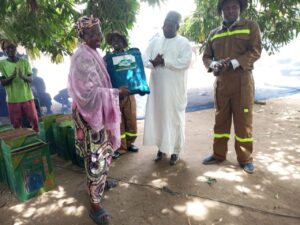
A key highlight of the event was the distribution of knapsack sprayers to 50 farmers.